
Build a Green Online Store: 7 Quick-Start Strategies for Sustainable eCommerce
Are you curious about how to align your eCommerce business with the growing trend of eco-conscious shopping? Do you wonder if sustainability and profitability can coexist? This guide provides actionable insights into achieving just that. Discover how to weave sustainability into the very fabric of your business operations to drive sales.
The Business Case for Sustainable eCommerce
Market Trends: The Rise of Eco-Friendly Shopping
Sustainability is no longer just a buzzword or a passing trend—it's a seismic shift in consumer behaviour that is shaping the marketplace. Recent market analyses indicate that sustainable brands are growing at an unparalleled rate, more than five times faster than their non-sustainable counterparts. This isn't a phenomenon restricted to a particular sector; it's a cross-industry reality. The message is clear: brands that don't adapt to these eco-friendly shifts not only risk falling behind but also face the danger of becoming irrelevant in an increasingly eco-conscious global market.
Sustainability as a Unique Selling Proposition (USP)
In the crowded online marketplace of today, standing out is essential for survival. Herein lies the value of sustainability as a unique selling proposition (USP). This approach does more than just minimise your environmental impact. It sets the stage for building a resonant brand, closely aligned with consumer values. By embracing eco-friendly practices, you're not simply doing good—you're enhancing your bottom line.
Key Strategies for Sustainable and Profitable eCommerce
Incorporating sustainability into your eCommerce business doesn't have to be a daunting task. By focusing on key areas, you can make significant strides in becoming eco-friendly while also boosting your sales. In this section, we'll delve into various strategies that can help you build a sustainable and profitable business.
1. Eco-Friendly Packaging Solutions
The Importance of Biodegradable and Reusable Packaging
Packaging is often the first touchpoint between your product and the customer. Opting for biodegradable or reusable packaging not only reduces waste but also sends a strong message about your brand's commitment to sustainability.
Incentivising Customers to Choose Green Packaging
To encourage customers to opt for eco-friendly packaging, consider implementing a rewards program that offers points or discounts for making the sustainable choice. For instance, some brands offer a small discount on the customer's next purchase if they return the packaging for reuse, thereby encouraging a cycle of sustainability.
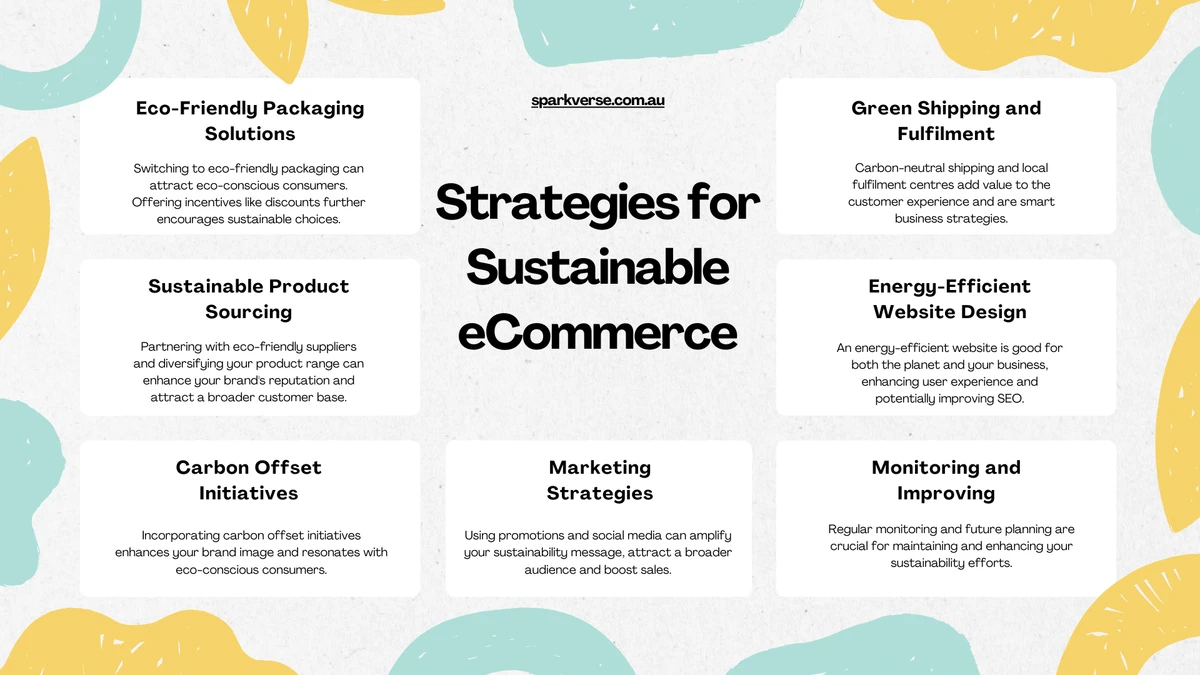
Key Takeaway: Switching to eco-friendly packaging can attract eco-conscious consumers. Offering incentives like discounts further encourages sustainable choices.
2. Green Shipping and Fulfilment
The Benefits of Carbon-Neutral Shipping
Shipping is one of the most significant contributors to an eCommerce business's carbon footprint. Implementing carbon-neutral shipping, where the carbon emissions are offset by funding renewable energy projects, can make a substantial difference.
Local Fulfilment Centres: A Win-Win for Businesses and the Planet
Utilising local fulfilment centres not only reduces shipping times but also significantly cuts down on carbon emissions. By storing products closer to your customer base, you can offer faster delivery times, which is a major selling point for many consumers. Additionally, some businesses offer a pick-up option for local customers, further reducing the need for long-distance shipping and its associated environmental impact.
Key Takeaway: Carbon-neutral shipping and local fulfilment centres are not just eco-friendly choices; they also add value to the customer experience, making them smart business strategies.
3. Sustainable Product Sourcing
Partnering with Eco-Friendly Suppliers
One of the most effective ways to make your eCommerce business more sustainable is by partnering with suppliers who share your commitment to eco-friendly practices. Look for suppliers who have certifications for ethical labour practices and sustainable materials. This not only ensures that your products are responsibly made but also adds a layer of trust and credibility to your brand.
The Value of Offering a Sustainable Product Range
Expanding your product range to include eco-friendly options can attract a broader audience. For example, you could offer organic cotton clothing, reusable kitchenware, or products made from recycled materials. This diversification not only appeals to eco-conscious consumers but also positions your brand as a leader in sustainability.
Key Takeaway: Choosing eco-friendly suppliers and diversifying your product range with sustainable options can significantly enhance your brand's reputation and attract a wider customer base.
4. Energy-Efficient Website Design
Why an Energy-Efficient Website Matters
Your website serves as the digital storefront of your eCommerce business. Just like a physical store, it consumes energy—something many people don't often consider. Websites have a carbon footprint, generated by the servers that host them and the devices that access them. Making your website more energy-efficient not only reduces your environmental impact but can also improve site speed, which enhances the user experience. Check out the best website builders and find one that suits your business.
Practical Tips for Reducing Your Website's Carbon Footprint
Choosing a green web hosting provider that uses renewable energy can be a significant step toward reducing your website's carbon footprint. Additionally, optimising your site by compressing images and using lazy loading techniques can further reduce energy consumption. These changes not only make your website more eco-friendly but also improve its performance, which is a crucial factor in customer satisfaction and SEO ranking.
Key Takeaway: Making your website energy-efficient is a dual benefit strategy—it's good for the planet and good for your business, enhancing user experience and potentially improving SEO.
5. Carbon Offset Initiatives
Understanding the Role of Carbon Offsetting
Every eCommerce transaction, from website hosting to product shipping, has a carbon footprint. For instance, an online store might emit one tonne of CO₂ annually from its operations. Carbon offsetting could involve planting trees or investing in renewable energy projects to neutralise that tonne of CO₂. By weaving carbon offsetting into your business strategy, you are actively reducing the environmental impact of each sale.
Empowering Customers to Offset Their Purchases
Offer customers the chance to add a small contribution to their purchase that goes directly to carbon offset projects. This could be termed as an 'eco-contribution'. As an added incentive, consider matching their contributions dollar-for-dollar. By matching their contributions, you demonstrate shared responsibility and commitment, strengthening customer trust and loyalty.
Key Takeaway: Incorporating carbon offset initiatives not only helps in mitigating your eCommerce business's environmental impact but also resonates with eco-conscious consumers, enhancing your brand image and trustworthiness.
6. Marketing Strategies for Sustainable eCommerce
Promotions for Eco-Friendly Products
Highlighting your eco-friendly products through special promotions is an effective way to engage customers. Consider creating exclusive bundles that feature your sustainable products or offering discounts on items that have a lower environmental impact. These incentives not only encourage customers to make eco-friendly choices but also help to boost your overall sales.
Leveraging Social Media to Promote Sustainability
Social media platforms are powerful tools for spreading the word about your sustainability efforts. Use them to showcase your eco-friendly products, share behind-the-scenes looks at your sustainable practices, and even collaborate with influencers who align with your brand's values. Incorporating these strategies into your digital marketing plan can significantly increase your reach and attract a like-minded audience.
Key Takeaway: Strategic promotions and effective use of social media can amplify your sustainability message, attract a broader audience, and contribute to sales growth.
7. Monitoring and Improving Sustainability Efforts
Tools for Tracking Your Sustainability Impact
Monitoring is crucial for understanding the effectiveness of your sustainability initiatives. Various data analytics tools can help you track metrics like carbon emissions, waste reduction, and energy usage. These tools can provide valuable insights into how well your efforts are paying off and where you might need to make adjustments.
Future Plans for Enhancing Your Sustainability Initiatives
Sustainability is a long-term commitment that requires ongoing effort. After evaluating the effectiveness of your current strategies, consider setting new sustainability goals for the upcoming year. Whether it's reducing plastic usage, sourcing more products from ethical suppliers, or further optimising your website for energy efficiency, having a roadmap for future sustainability efforts can keep your business on the right track.
Key Takeaway: Regular monitoring and future planning are essential for maintaining and improving your sustainability efforts. Utilising the right tools can provide actionable insights, while setting future goals ensures that your business continues to evolve in a sustainable direction.
In conclusion, the increasing consumer demand for sustainable business practices, especially in the realm of eCommerce, is clear. The integration of eco-friendly strategies, from product sourcing to shipping, not only underlines a company's commitment to environmental responsibility but also solidifies its position in an evolving marketplace. By proactively adopting and adapting to these green strategies, businesses can cater to a growing eco-conscious customer base while simultaneously boosting profitability.